
Leading Toward a New Era in Coffee
Blue Bottle Sponsors Pre-Commercial Trial Site for New Coffee Varieties
At Blue Bottle, sustainable sourcing means taking care of our own operations but also investing in industry initiatives to affect change beyond our value chain.
Since 2021, Blue Bottle has been a member of World Coffee Research (WCR), an industry organization developing high-quality, climate-resilient coffee varieties to help shape a more secure future for coffee. Being a sustaining member is part of our responsible coffee sourcing commitment and helps advance our priority of leading toward a new era in coffee.
Part of our membership role involves providing sensory feedback on coffees under development. WCR runs programs breeding new coffee varieties, conducting field trials to test them, and developing nurseries and seed lots to help ensure these improved plants reach farmers’ fields.
For several years now, we have tracked the advancement of WCR’s F1 Hybrid Trials — the organization’s first breeding effort, which aims to produce highly productive, climate-resilient coffee varieties.
In 2022, WCR advanced four of its top-performing F1 hybrid varieties to pre-commercial trials to assess the plants under commercial conditions before viewing opportunities for uptake and adoption within the industry. WCR announced the opportunity for member companies like Blue Bottle to sponsor the trials, and we saw a clear choice in our supplier of 13 years, Los Volcanes Coffee. Los Volcanes Founder and Creative Director, Josué Morales, has a history of experimenting with new varieties and is deeply embedded in Guatemala’s coffee industry.
We were thrilled when Blue Bottle's bid was selected for Los Volcanes to be one of six hosts of 10 pre-commercial trial sites. These sites will test the final four variety candidates in standard production environments and determine their suitability for commercial release. We spoke to Morales about his approach with the plants and how the trials are going so far:
Hi Josué! What interested Los Volcanes in serving as a pre-commercial trial site for WCR’s F1 Hybrids program? What experiences best prepared LVC for this moment?
I’ve been working in developing varieties since 2008 and have witnessed the importance of investing in R&D over the long term. Investing in R&D is something that does not generate an immediate result but something that needs to be done with a long-term perspective and having the next generation in mind. Coffee is a business of legacy, which takes time to learn and to perfect; thus, the need to consider terroir — or this idea that the coffee reflects the characteristics of where it comes from and who produced it — is crucial when selecting a variety that will have a long lifespan performing that function and at the same time aiding agricultural and economic challenges.
Describe what you received, and what you know about the plants. What will be your approach to planting and caring for these trees through the 2030 trial conclusion?
We received 16 different variations of the new genetic material, four of each type. The approach is to care for these plants in their developing stage at the nursery, and take them to a stage where they are developed enough to be planted. From there, the program is designed to allow them to thrive—or not—under our organic agricultural program.
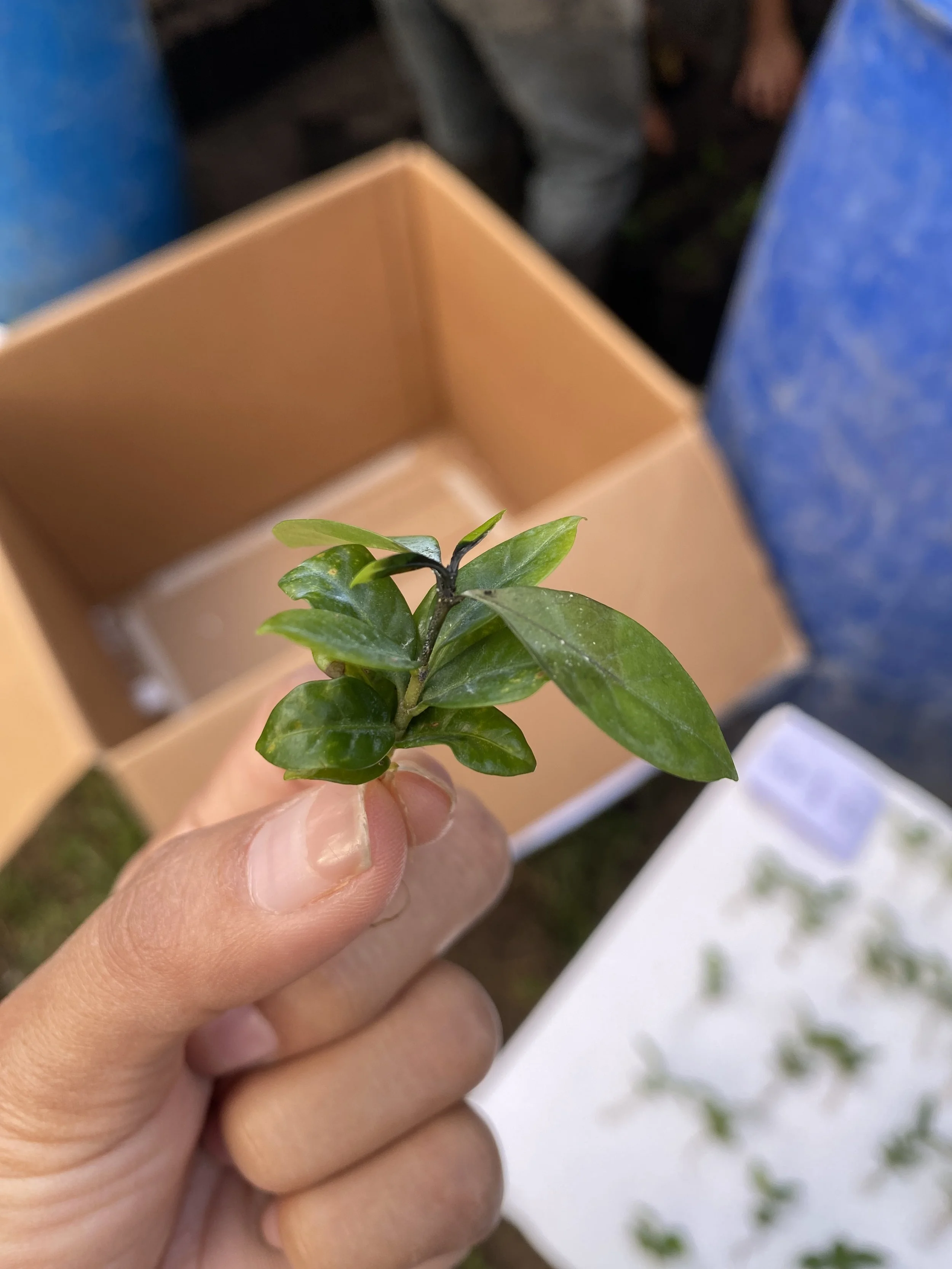
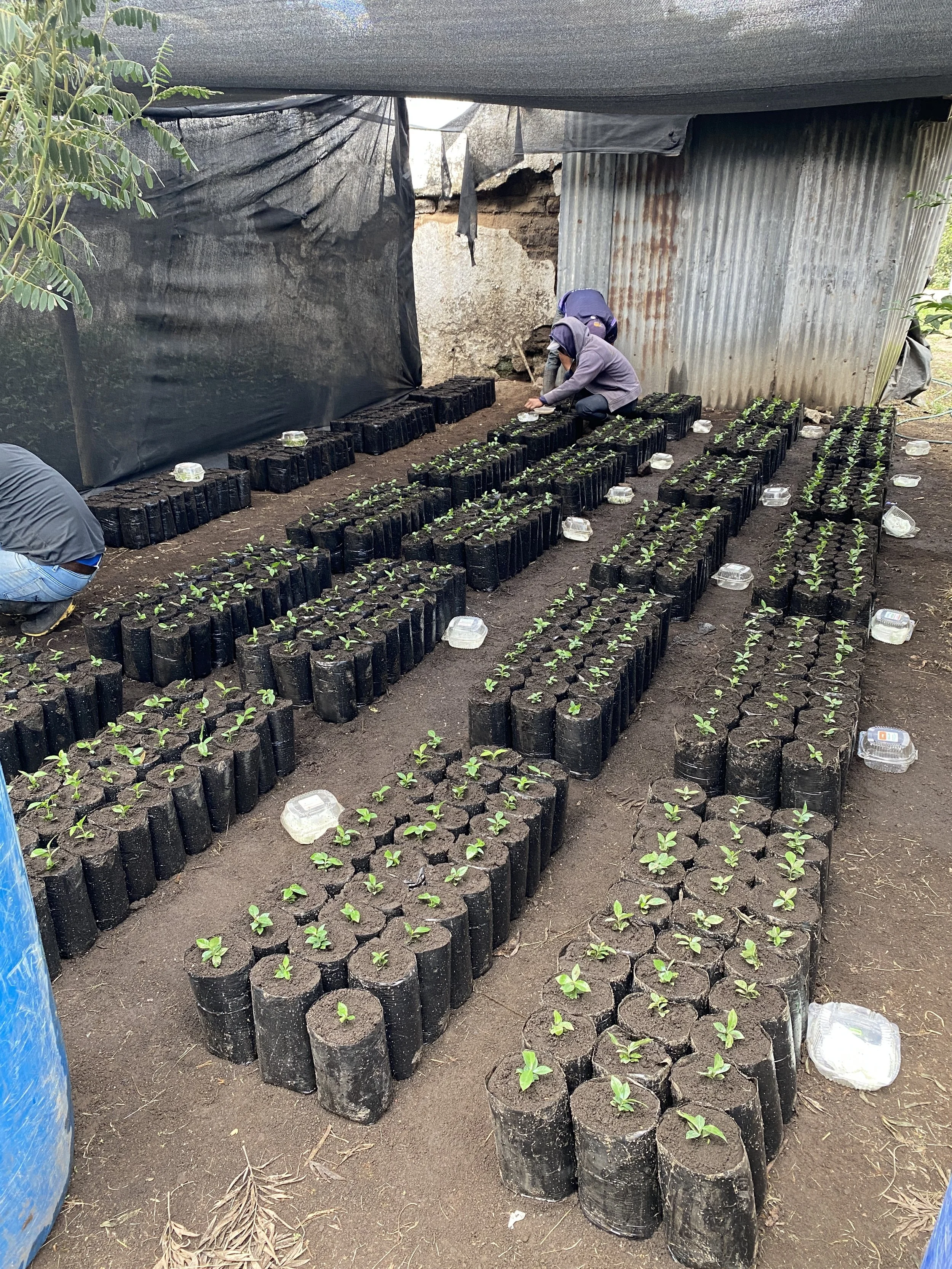
Receipt of the F1 Hybrid plantlets and installation in the nursery in December 2024. Photo courtesy Los Volcanes Coffee
It is fall 2025. Where are we today in this process? When might we expect the first production?
The plants are still at the nursery. They have had a slow adaptation, and the reaction for root and vegetative growth has required time and patience. Due to this, we anticipate planting in May of 2026 with the idea of having a first production in 2028 and a full harvest in 2029.
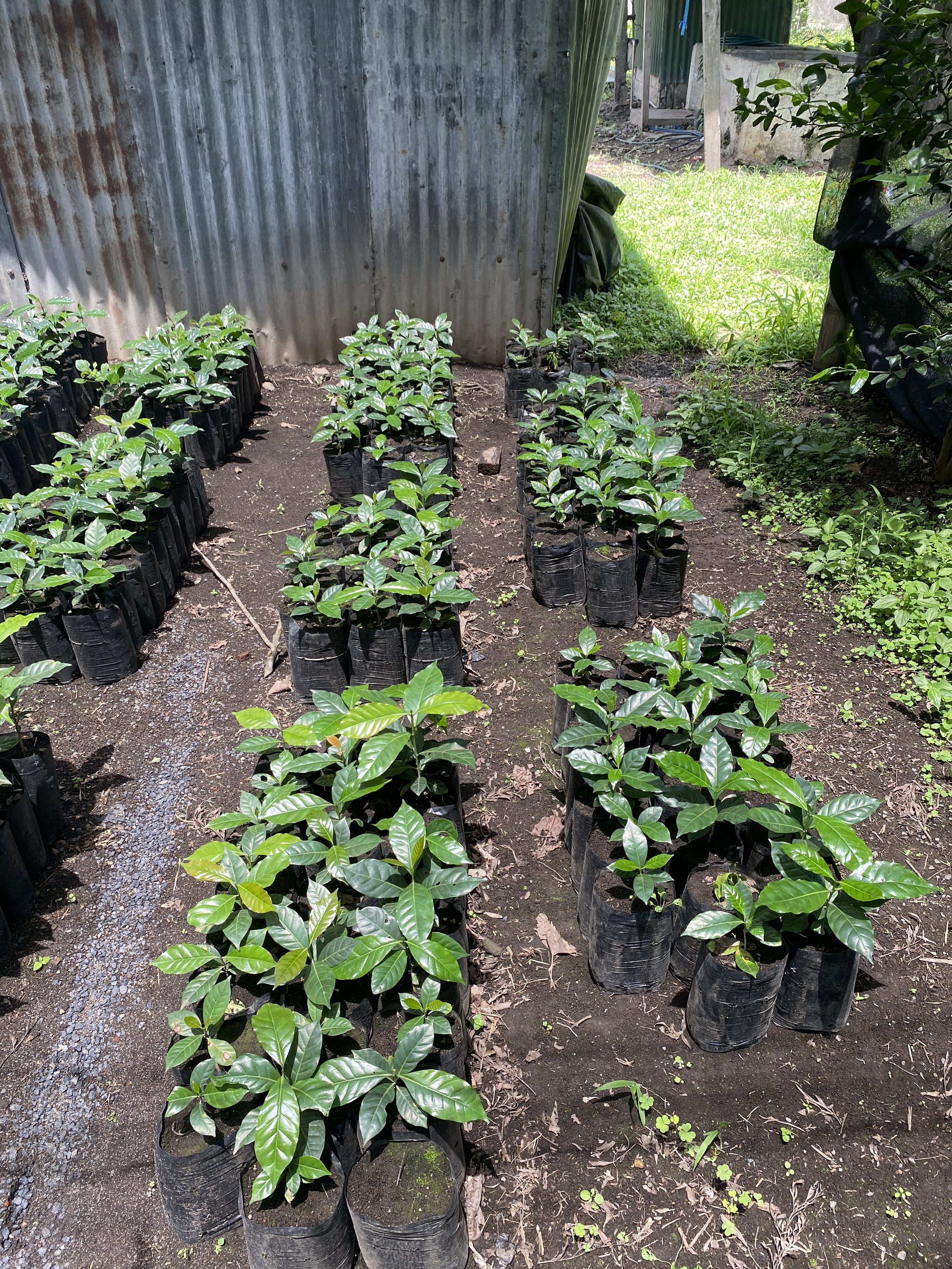
F1 Hybrid plants at the nursery in September 2025. Photo courtesy Los Volcanes Coffee
Do you have any expectations, or what do you hope to learn?
The expectation is geared toward observing how they will perform in health, resistance to diseases, and adaptation to climate, as it relates to productivity. Hand in hand, once production happens, the expectation is to understand the potential for cup quality.
Anything you would like to add?
If there is something I’ve learned with coffee plants, and especially new genetic materials, it is that we have to create the conditions for them to express themselves. They will often do what they know to do once those conditions are met, and then it’s our work to interpret the data collected in that process to better understand how we can help them succeed.
If any of these final four candidates outperform their comparison varieties on productivity and profitability upon the conclusion of the pre-commercial trials in 2030, WCR will support the development of distribution models for widespread access by farmers.
These F1 hybrids are just the start of WCR’s variety development efforts, as the organization looks forward to releasing 100 arabica varieties to trials in 2030 via its Innovea Global Arabica Breeding Network, in addition to launching a robusta breeding network later in 2025.
We are grateful for Los Volcanes’s dedication to research and innovation, and to WCR for its longstanding commitment to contributing to a more resilient future for coffee production systems and communities.
We look forward to tracking the progress of these trials and reporting the results as the first cherries arrive and the first production harvest takes place.